
Press Releases
Following the Death of Nurul Amin Shah Alam, Kennedy Introduces DHS Release Transparency Act to Ensure Family Notification of Release
Buffalo, NY,
June 2, 2026
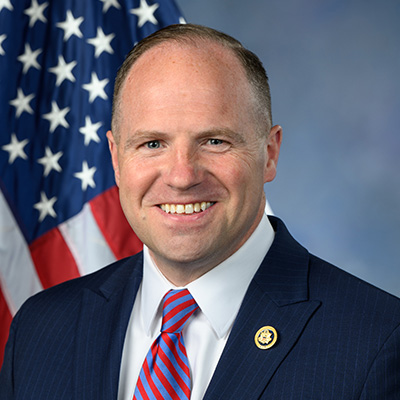
Shah Alam, a Rohingya Refugee with Legal Status, was Released by DHS Agents at a Closed Tim Hortons in the Buffalo Winter Without any Notice to Family Speaking Little to No English, Nearly Blind, and Without Shoes, Shah Alam Suffered for Days While his Family Desperately Tried to Find Him - Death has Been Ruled a Homicide BUFFALO, N.Y. - Standing under an etching of the Constitution and its promise that individuals cannot be deprived of life, liberty, or property without proper legal procedures, Congressman Tim Kennedy announced the introduction of the DHS Release Transparency Act. The legislation, inspired by the tragic and preventable death of Nurul Amin Shah Alam, would require Immigration and Customs Enforcement (ICE) and Customs and Border Protection (CBP) to notify a detainee's chosen point of contact prior to release from DHS custody. After Shah Alam’s release from local custody, he was immediately taken into custody by DHS, who erroneously believed he lacked legal status. Upon receiving confirmation that he was indeed legally present in the United States, the DHS agents, rather than notifying his loved ones of his status, dropped Shah Alam at an unsafe, unfamiliar location – a closed Tim Hortons restaurant on a wintery Buffalo night. Shah Alam was nearly blind, did not speak English, suffered from mobility issues, and was not equipped with proper clothing to safely be outside. He was found dead five days later. Watch the full press conference here. Kenndy’s legislation is cosponsored by Representatives Bennie G. Thompson, Jamie Raskin, Grace Meng, Jerry Nadler, Dan Goldman, Adriano Espaillat, Troy Carter, and James Walkinshaw. This bill is endorsed by the National Immigrant Justice Center and Global Refuge. “Nurul Amin Shah Alam and his family came to Buffalo seeking the American dream,” said Congressman Kennedy. “They fled war and persecution, seeking the ability to build a new life for themselves in a country that respected their right to worship, that provided economic opportunity, and that welcomed them not just as refugees, but as neighbors. Less than a year and a half later, he was dead. This death was preventable, and it points to the clear need to demand better of ICE and CBP. My legislation does just that.” “No family should be left wondering whether their loved one is safe after being released from DHS custody. The death of Mr. Shah Alam exposed a glaring failure that put a blind man in serious danger with tragic consequences that could have been avoided. I thank Congressman Kennedy for introducing this legislation to ensure transparency at DHS and help make sure a tragedy like this never happens again,” said Committee on Homeland Security Ranking Member Bennie Thompson. “Nobody should vanish into government custody and then be cast out alone into danger without so much as a call to their family. This bill injects a basic measure of humanity and compassion to a system that failed Nurul Amin Shah Alam in the most devastating way. I’m proud to support Rep. Kennedy's legislation and admire his leadership,” said Judiciary Committee Ranking Member Jamie Raskin. “DHS agents left a vulnerable man who did not speak English to die in the freezing cold and then lied to cover it up. We must hold DHS accountable for this heartbreaking tragedy. That is why I am co-sponsoring Rep. Kennedy’s DHS Release Transparency Act to bring much-needed reforms to ICE and CBP and ensure that every person has a trusted point of contact for release, regardless of the language they speak. Nurul Amin Shah Alam should still be alive today, and we will continue to demand justice in his name,” said Rep. Grace Meng, Chair of the Congressional Asian Pacific American Caucus (CAPAC). Currently, neither ICE nor CBP provide notice to a point of contact or family member when a detainee is released. When a detainee is released from ICE custody, they are notified personally of the upcoming release and typically provided the opportunity to make a free phone call to facilitate release arrangements. These standards, dictated by the Performance Based National Detention Standards (issued in 2011 and revised in 2016), are not codified, vary across ICE facilities, and are not always adhered to. Shah Alam was held in CBP custody, which has no codified policy that requires notifying family or an attorney of a release. The DHS Release Transparency Act closes this gap, requiring DHS to make families aware of their loved one’s upcoming release in order to ensure their safety. Recognizing that Shah Alam had significant communication and translation challenges while in custody, the bill requires DHS to provide translation and interpretation services throughout the entire point-of-contact (POC) notification process. This includes ensuring the detainee is made aware of the POC notification option in a language that they can understand. It also requires DHS to notify the designated point of contact in a language they can also understand prior to a detainee’s release. In order to protect families, the legislation explicitly prohibits DHS from using any of the point of contact’s information for enforcement purposes. New York State Senator April N.M. Baskin said, "I was heartbroken by the tragic death of City of Buffalo resident Nurul Amin Shah Alam in February. No human being – especially residents with disabilities who’ve been wrongfully detained – should be released into our community without a clear plan to ensure their safety. The DHS Transparency Act will improve accountability and communication, preventing tragedies like this from happening again. I thank Congressman Kennedy for his leadership on this issue and for working to ensure no other family ensures such an unimaginable loss." “What happened to Nurul Amin Shah Alam was tragic, preventable and deeply disturbing,” said Senator Jeremy Zellner. “A lawful refugee who was nearly blind and unable to speak English should never have been released without support, without notice to his family or attorney and without a plan to keep him safe. Congressman Kennedy’s DHS Release Transparency Act is a commonsense step to make sure families, and designated contacts are notified before someone is released from federal custody, with the translation services and guardrails needed to protect basic rights. No family should have to experience what Mr. Shah Alam’s family has endured, and no community should have to ask how something like this was allowed to happen.” Assemblymember Jon D. Rivera said, “The tragic death of Nurul Amin Shah Alam was a preventable failure that demands action. No family should be left in the dark when a loved one is released from federal custody, especially when timely communication could mean the difference between safety and tragedy. The DHS Release Transparency Act is a commonsense, humane measure that will bring greater accountability and dignity to the release process by ensuring that individuals are not left vulnerable and alone. I am proud to stand with Congressman Kennedy in support of this legislation and in our shared commitment to building an immigration system that prioritizes transparency, compassion, and basic human decency.” “The death of Nurul Amin Shah Alam will forever be a tragedy,” said Erie County Legislator Taisha St. Jean Tard. “The DHS Release Transparency Act would provide a layer of protection and would help ensure that no one else experiences what Nurul Amin Shah Alam endured. I thank Congressman Kennedy for his leadership and urge all members of Congress to support this act.” "The tragic and preventable death of Nurul Amin Shah Alam highlighted serious gaps in communication and accountability that should never be ignored,” said Erie County Legislator Lawrence Dupre. “No family should be left in the dark when a loved one is released from federal custody. I want to thank Congressman Tim Kennedy for introducing this legislation that takes a commonsense step toward ensuring individuals are treated with dignity and that families, attorneys, and designated contacts are informed during critical moments." ### |