
Press Releases
Kennedy Warns: Trump’s Cruel Loan Cuts Will Cause Healthcare Workforce to Flatline
Washington,
December 5, 2025
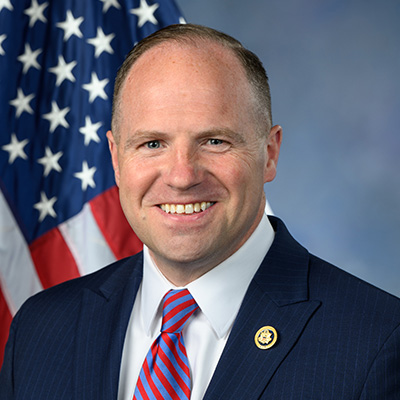
In Speech Before Congress and in Letter to Trump Administration, Kennedy Condemns New Loan Rules That Will Deepen Workforce Shortage Kennedy, an Occupational Therapist, Demands Repeal of Misguided Rule That Will Further Weaken our Healthcare System WASHINGTON, D.C. - Congressman Tim Kennedy (NY-26) led 69 of his colleagues in a letter to the Trump Administration demanding the reversal of its dangerous decision to impose strict federal loan limits on certain advanced degree programs. Under the new Department of Education policy, certain advanced degree programs including those in high-demand healthcare fields such as nursing, physician assistant studies, physical therapy, occupational therapy, audiology, speech-language pathology, social work, public health, and others, are not classified as “professional programs,” meaning students pursuing these degrees will only be able to borrow half as much as their counterparts in unaffected fields. Kennedy warned that these new restrictions will severely hinder the ability of prospective healthcare professionals to finance their education and enter the field, further destabilizing a healthcare system already in crisis. These loan limits will worsen staff shortages, restrict access to higher education, and further strain a healthcare system already at its breaking point. Kennedy also underscored these concerns in remarks on the House floor, citing deepening staff shortages, clinic closures, and communities increasingly being left without access to timely care.
Kennedy Speaks on the House Floor “When I went to grad school to become an OT, I had to take out loans. I remember filling out those forms, hoping I’d have enough to cover tuition, books, and rent,” said Congressman Kennedy. “I remember the weight of those payments followed me for years. I took on that debt because I wanted to build a better future for my family, and because I wanted to help people. This administration wants to force aspiring healthcare professionals to mortgage their futures before they treat their first patient. Worse, this move will deter them from answering their calling, taking an axe to the very system that trains them. As the only occupational therapist in Congress, I will not sit idly by while Trump and Congressional Republicans sabotage the very workforce that keeps this nation alive.” In their letter, Kennedy and his colleagues detailed ongoing healthcare workforce shortages, with the Bureau of Labor Statistics estimating that the nation will need to fill nearly 195,000 nursing positions every year through 2033. This policy change is compounded by the vast damage caused by the passage of the Big, Ugly Bill that gutted $1 trillion from the nation’s healthcare system, threatening to push struggling clinics and hospitals over the cliff. Without action to prevent these new loan limits from taking effect, generations of students will lose the ability to enter the healthcare workforce.
The text of the Kennedy-led letter is below:
The Honorable Linda McMahon Secretary of Education U.S. Department of Education 400 Maryland Avenue SW Washington, D.C. 20202
Dear Secretary McMahon, We write with deep concern regarding recent policy changes that impose strict federal student loan limits on advanced healthcare degree programs. As a result of provisions in H.R. 1, the Department of Education’s (Department) most recent negotiated rulemaking introduces new distinctions between graduate programs in determining federal loan eligibility. These distinctions will directly undermine the ability of nurses, physical and occupational therapists, social workers, public health workers, mental health counselors, and other essential healthcare professionals to finance their education. Federal aid is one of the most effective tools for ensuring a stable and accessible healthcare workforce. This inequitable restructuring of graduate loan access places careers - in healthcare and a range of other professions - out of reach for middle-class students, deepens existing workforce shortages, and further strains a healthcare system already in crisis. We urge the Department to immediately reverse this harmful policy and ensure equal access to federal loans for all graduate degrees. Historically, most graduate and professional students across disciplines have had access to the same federal borrowing limits. However, H.R. 1 made disastrous changes to these programs, creating disparities in how much certain graduate students can borrow for direct unsubsidized loans. Subsequently, on November 6, 2025, the Department moved forward with a proposal that compounds these disparities by failing to classify nursing, occupational therapy, physical therapy, and other graduate medical degrees as “professional programs.” As a result of the Department’s failure to classify these professions appropriately, students pursuing these degrees will be permitted to borrow only half as much in federal loans compared to their counterparts in other fields. This reduction, combined with the elimination of the Grad PLUS program, represents a dramatic and destabilizing shift in how individuals pursue necessary advanced training for healthcare professions. In practice, this policy undermines the future and stability of our healthcare system at a time of unprecedented workforce need. Across hospitals, clinics, and community health centers, the warning signs are clear. Nursing units are short-staffed, mental health providers are overwhelmed, and rehabilitation clinics cannot hire therapists fast enough to meet soaring patient needs. Federal labor projections paint a stark picture of what these shortages look like on the ground. The Bureau of Labor Statistics estimates that the U.S. will need to fill roughly 194,500 nursing positions every year through 2033, and demand for social workers and mental health counselors is expected to require nearly 123,000 new professionals annually. In rehabilitation fields, where patients rely on consistent access to physical and occupational therapy, demand for providers is projected to grow at rates nearly triple the national average, leaving thousands of unfilled positions each year. These are not abstract numbers; they represent real patients waiting longer for care, communities losing vital services, and exhausted providers being stretched beyond capacity. By restricting access to federal loans, the Department is narrowing the pathway into these critical healthcare professions at the very moment that the need is surging, placing these degree programs out of reach for millions of prospective students. The result will be immediately felt in clinics already contending with staffing shortages and, over time, in teaching hospitals and training programs where shrinking graduate cohorts will weaken the pipeline of future practitioners. This policy only worsens the workforce crisis that is already compromising care and threatens to destabilize the nation’s entire healthcare infrastructure for generations to come. Aside from the workforce shortage this policy will create, it puts up yet another barrier to the middle class in the midst of our nation’s ongoing cost-of-living crisis. For tens of thousands of students, federal aid is the only viable pathway to afford the advanced training required for these medical professions, as well as those outside healthcare, including education, accounting, and architecture. By arbitrarily capping support, the Department is effectively pulling up the ladder of opportunity, forcing aspiring healthcare professionals to take on predatory private debt or abandon their calling altogether. This decision is the height of hypocrisy by an administration that claims to support the middle class, while actively penalizing working-class students seeking to serve their communities. In the richest country in the world, the Department’s proposal saddles an already overburdened health workforce with tremendous financial and staffing challenges. At a critical inflection point in the future of our nation’s healthcare, the administration must be advancing policies that address pressing workforce shortages and the cost of delivering care rather than exacerbating them. Given the need to correct this issue, we are actively considering policy options to ensure equal treatment of federal loans for graduate degrees. We urge you to reverse course immediately to prevent irreversible damage to critical medical workforces. Sincerely, ###
|
