
Press Releases
The Clock is Ticking: Students Have Only a Few Months to Make Grad School Decisions - Kennedy Pushes for Passage of the LEAP Act to Provide Equal Access to Higher Education for In-Demand Professions
Buffalo, NY,
December 22, 2025
The Loan Equity for Advanced Professionals Act Restores Fairness and Financial Parity for all Advanced Degree Students
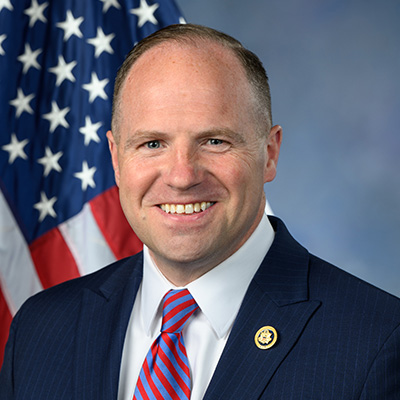
AMHERST, N.Y. – Joined at Daemen University by educators, professionals, students, and advocates, Congressman Tim Kennedy (NY-26) called for swift passage of his legislation, the Loan Equity for Advanced Professionals (LEAP) Act. With decision time for grad schools coming up in April, Kennedy highlighted the pressing need to provide financial stability and predictability for students seeking advanced degrees. Last week, Kennedy and several colleagues introduced the LEAP Act to rectify a borrowing disparity created by the Republican-led Big, Ugly Bill (H.R. 1). The new legislation aims to restore financial support for advanced degree students, including nurses, physical and occupational therapists, and physicians assistants, whose borrowing limits were significantly reduced while other professional programs remained unaffected. Under Kennedy’s bill, all post-baccalaureate degrees would be eligible to borrow the same $50,000 per year, with a borrowing total of $200,000.
“Becoming an occupational therapist was among the best decisions I ever made,” said Congressman Kennedy. “It opened new doors for me, changed my worldview, and it’s how I met my wife, a physical therapist. For each of us, access to financing was a challenging burden, but one that we took on knowing that we could make a difference in peoples’ lives. Higher education is about more than just earning potential, it’s about your contribution to the community and helping others. Right now, future grad students are studying their options, figuring out if they can enter the career path they’ve always wanted to. We need to pass the LEAP Act to keep that dream alive for future generations who want to play their part.”
“We know that one of the biggest barriers to education is financial, and the new limitations on loans will put degree programs out of reach for many. The healthcare graduate programs with new loan restrictions not only prepare students for more responsibility at the bedside, but they are also required to enter Nurse Education. Loan restrictions for advanced healthcare degrees will create new barriers that will limit enrollment and further deepen the healthcare worker shortage, and reduce the number of people qualified to teach healthcare programs,” said Don Fiorilli, Associate Director, 1199SEIU Training & Employment Funds.
“Equitable access to federal student loans is essential if we expect students to pursue advanced degrees in the health professions our communities depend on most,” said D’Youville University President Dr. Lorrie Clemo. “When loan limits unfairly restrict fields like nursing, occupational therapy, and physical therapy, we risk worsening workforce shortages at a time when demand is only growing. The LEAP Act restores fairness and ensures that students are not priced out of careers dedicated to caring for others.”
“ASHA-certified audiologists and speech-language pathologists in New York thank Rep. Kennedy for his leadership in protecting access to the advanced degrees required to deliver essential communication services,” said Bernadette Mayfield-Clarke, PhD, CCC-SLP, 2025 ASHA President. “Demand for these professionals in New York is projected to grow more than 22% for audiologists and 25% for speech-language pathologists by 2032. Rep. Kennedy’s legislation preserves access to higher federal loan limits, ensuring audiologists and speech-language pathologists can complete their training and meet growing workforce needs statewide.”
“At Kaleida Health, we are committed to supporting our staff’s career growth. We support the Loan Equity for Advanced Professionals (LEAP) Act and thank Congressman Kennedy for his tireless advocacy for New York State’s healthcare professionals. The LEAP Act will help reduce financial barriers for those seeking advanced healthcare degrees and build a more robust healthcare workforce. It is essential that we continue to provide resources for our dedicated staff to advance in their professions. Not only will these meaningful loans strengthen our workforce, but they will also increase access to high quality health care for patients statewide,” said Don Boyd, President and CEO, Kaleida Health.
“The LEAP Act is critical legislation to secure the future of our country by ensuring students interested in pursuing graduate degrees in high-demand fields can access the funding necessary to reach their dreams, realize their potential, and support their families and communities with vital services,” said Canisius University President Steve K. Stoute
“I began my career as a registered nurse, and I know firsthand that graduate education is not a luxury in healthcare — it’s how nurses advance, specialize, and ultimately become the educators who train the next generation,” said Catholic Health CEO Joyce Markiewicz. “I’m grateful to Congressman Kennedy for introducing the LEAP Act, which restores fairness and helps ensure the healthcare professionals our patients rely on can afford the education their careers — and our communities — depend on.”
Under H.R. 1, the Grad PLUS program was eliminated and replaced with a two-tiered system. Beginning in July 2026, so-called “professional” degrees will be eligible for borrowing up to $50,000 per year, while “graduate” degrees will only receive up to $20,500 per year, creating a massive disparity and exacerbating ongoing shortages in critical healthcare and other professional fields. Examples of professional degrees include MDs, JDs, and PharmDs, while graduate degrees include a wide variety of other post-baccalaureate degrees such as nursing, therapy, public health, engineering, teaching, and more. Kennedy, the only occupational therapist in Congress, has heard from a wide range of educators and students who are deeply concerned that their access to their desired field of work is being closed off, threatening to make ongoing professional shortages even worse.
The changes implemented in H.R. 1 are slated to go into effect on July 1, 2026. Kennedy’s legislation, co-led by Reps. Jill Tokuda (HI-2) and Shomari Figures (AL-2) would have the same effective date, ensuring equal access for medical professional students moving forward.
This legislation is endorsed by the AFL-CIO, American Federation of Teachers; American Occupational Therapy Association; American Physical Therapy Association; Association of Schools and Programs of Public Health; Council on Social Work Education; National Association of Social Workers; National Board of Certification of Occupational Therapy; National Hispanic Health Foundation; Hispanic Health Professionals Network; National Board for Certified Counselors and Affiliates; Association of Schools Advancing Health Professions. |