
Press Releases
Kennedy Introduces Legislation to Strengthen Transparency, Predictability, and Local Impact of FEMA Preparedness Grants
Washington, D.C.,
December 9, 2025
Tags:
Homeland Security
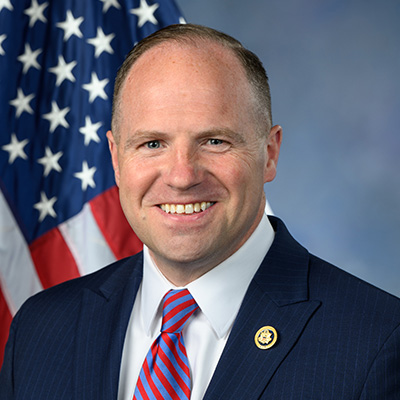
Kennedy’s DHS Grants Accountability Act Would Ensure Funding Decisions Are Data-Driven WASHINGTON, D.C. – Congressman Tim Kennedy (NY-26), a member of the Committee on Homeland Security, introduced the DHS Grants Accountability Act, legislation that would guarantee greater transparency, consistency, and data-driven decision-making within the Federal Emergency Management Agency’s (FEMA) homeland security preparedness grants programs. The bill directly addresses long-standing concerns raised by the Government Accountability Office and stakeholders about unpredictable timelines, opaque risk methodologies, and abrupt funding shifts that compromise local preparedness. By codifying clear award timelines and transparent methods, the DHS Grants Accountability Act strengthens the integrity of one of the federal government’s most critical homeland security programs nationwide. “I am proud to lead legislation that makes commonsense, necessary reforms to restore fairness and predictability to FEMA’s suite of preparedness grant programs,” said Congressman Kennedy. “When local needs are placed at the forefront of these funding decisions, communities can focus on what matters most: keeping people safe. Western New York families and first responders deserve a system of federal support that is transparent, reliable, and rooted in real risk.” “For decades, the federal government has distributed billions in homeland security grants to our communities to prevent terror attacks and respond to disasters,” said Committee on Homeland Security Ranking Member Bennie Thompson. “This legislation will clarify Congressional intent and ensure that FEMA awards grants based on need and in a timely and reliable manner. The DHS Grants Accountability Act helps keep our preparedness grants consistent and transparent, giving States and local partners the stability they need to keep our communities safe. I thank Congressman Kennedy for introducing this much-needed legislation and I look forward to working with him on passage.” FEMA’s preparedness grants portfolio includes the State Homeland Security Program, the Urban Area Security Initiative, the Nonprofit Security Grant Program, the Port Security Grant Program, and numerous public transportation security grant programs. These investments help state, local, nonprofit, and tribal partners prevent, protect against, and respond to evolving threats, including terrorism, cyberattacks, and natural disasters. This year, cities and states were given just two weeks to develop and submit complex grant applications for this funding - far short of the typical 60-day window and insufficient for coordinating local priorities. FEMA also altered its funding parameters without advance notice, cutting millions for New York State compared to FY24. Sudden shifts like these jeopardize public safety planning, hamper long-term investments, and leave high-risk areas, like Western New York’s border crossings, transit systems, and major population centers, without the support they rely on. The DHS Grants Accountability Act addresses these problems by:
|